Heidi Hansen, M.A. presents insights and possibilities for your Holistic Mental Health and Sobriety Recovery, including environment, nutrition, data-based coping skills, creativity, and social connections.
Author: therapyartistheidi
As a retired mental health professional, as well as professional artist-writer, I understand what motivates people to purchase products and services. I know how to establish relationships with clients that endure through time and engage long - term brand loyalty.
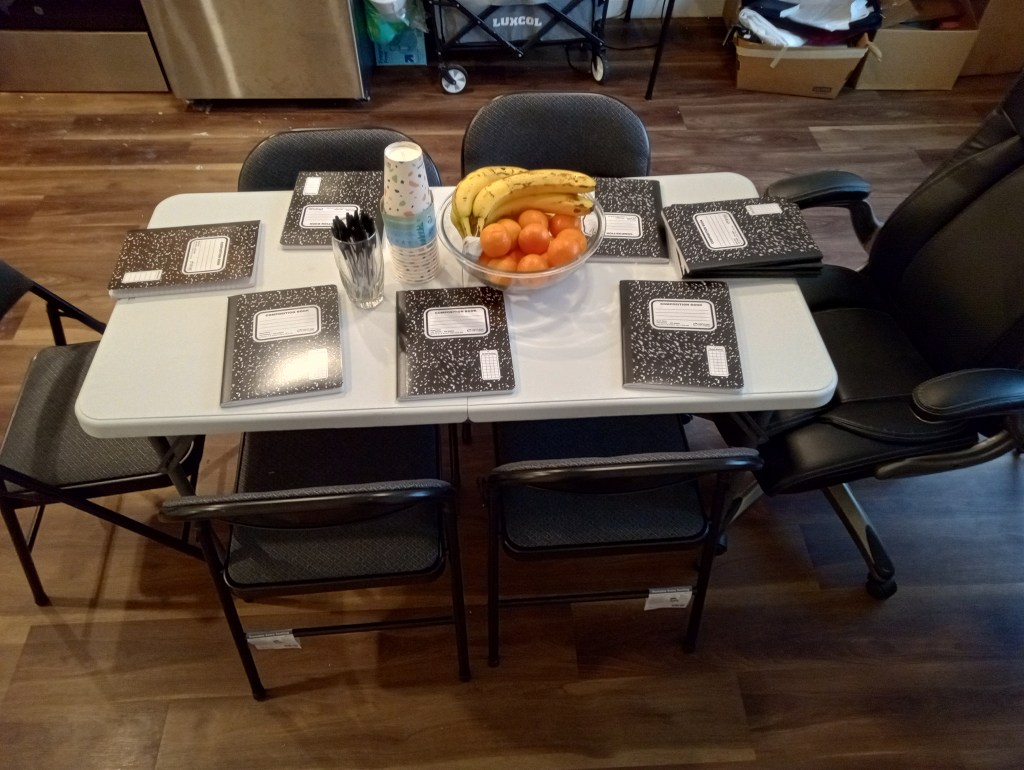
We will meet Each Tuesday afternoon from 12: 00 p.m. to 1:30 p.m. at Heidi’s Apartment Studio.
You may bring your own writing projects to work on, try out ideas, get constructive feedback, and learn how to get your works agented and/or published, and use self-publishing/self-marketing tools.
Or, you may use a free journal and pen and — longhand is always more productive — muse new ideas and bring your dreams onto the page and make a plan.
This is expert support from Heidi, so I do ask for a $20.00 fee for 4 weeks, payable in advance to reserve your seat.
I take Venmo at #art-life-coach-heidi.
RSVP at 360-798-9825, call or text, or email Heidi at Heidiauthorartist@gmail.com.
This workshop limited to 6 people.
Take one more significant step towards being the writer of your dreams!
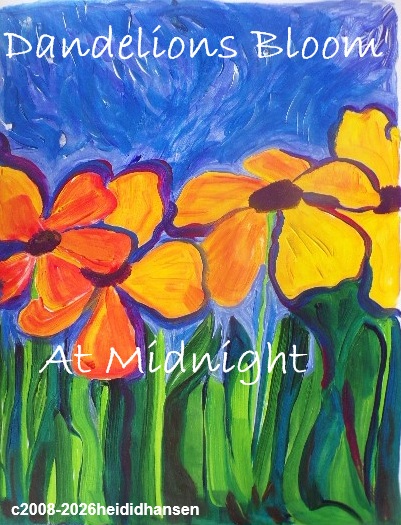
“Dandelions Bloom At Midnight” was the safe phrase my son and I used when and if plans changed — for example, someone else were to pick him up or meet him at the bus after school, or if he was staying the night at a friend’s house and was homesick but couldn’t talk about it, if he said that phrase, I knew it was still safe. Other and any oddball situations that come up when raising kids, that was the phrase to use to let me know things with him were safe and allright.
“Dandelions Bloom At Midnight” also has another meaning, a metaphorical one.
As human beings, we have a wealth of resiliency and an inner impulse and even compulsion to keep growing, keep trying, keeping options open, taking a new step, making it a new day.
Some people, alot of people I know, have bloomed in the best possible ways when going through and coming through adversity.
We can’t see it ourselves when we are in the thick of it.
Remember the safe phrase, when you are in the darkest most vulnerable overwhelming fearful hour.
Dandelions Bloom At Midnight.
You can find some resiliency, be imaginative and visualize something better than what you are experiencing now.
You can come through your darkest hour and shine so brightly.
Remember, many plants and flowers do ineed bloom at midnight, some need the dark to germinate and take root.
Some need the dark to flower.
Our mental health is an ecosystem, one of resiliency and creativity.
How can you blossom in your hour of struggle?
Start by planting a seed and imagining the flower.
This is a traditional sing-along American folk song, called “The Garden Song,” made popular by Peter, Paul and Mary and other classic fok singers from the 70’s.
It’s a terrific upkeep earbug tune to keep you positive and moving along.
Step by step, we go slow in recovery,
one thing at a time, then rest, and wait…
Then, one more positive motion, rest, wait…
It’s a garden, taking the time to take the time to prepare a sound growing environment, making it sustainable, tending it and keeping watch over it one little moment at a time.
And, not letting anyone trample on it.
This is music therapy, and something you can take into your own hands at home, work, family and recreation.
I encourage you to make a playlist on phone or computer — a go-to.
Remember Youtube is still free, and can be made into playlists.
It’s panting seeds, firstly and most importantly and sometimes the hardest part when we are struggling and everything is a mess.
Plant a little seed of something useful to your recovery, whether it be mental health, sobriety or the double whammy, both at the same time.
A LIttle later I’ll post the story behind “Dandelions Bloom At Midnight,” and there is a sstory.
Grow your own story to tell tht will inspire others to get out of bed, take a u-turn from something destructive, wait, rest, be open and willing to learn something better.
Practicing gratitude, like an exercise that strengthens your soul and serenity, has become a researched, data-based mental health and sobriety tool.
Even if it seems trite or artificial or corny at first, if you practice making a gratitude list each day — mentally or on paper or to a friend — over time it becomes part of our personality habits.
An attitude of gratitude will open possibilities, free up your imagination to vision a better life for yourself and provide the energy to obtain it.
Negative thinking, self-pity, self-seeking, complaining, manipulating, seeking control over others, drains our minds, bodies and spirits. It’s plumb exhausting.
Replacing those patterns with appreciation and acknowlegement of wht you have that is good, productive, nourishing and nurturing, safe and secure will help you be more resilient and energized.
Everyday, once a day at least, reflect in your mind on 5 things you are grateful for in this moment.
Perhaps keep post – it notes and a pen handy and just write the words down, and stick it in your pocket.
Vitamin “G” for Gratitude.
Say thank you to someone every day, even if they don’t know what they did that helped you or provided for you. Shock someone by showing appreciation.
Serenity, peace of mind, are priceless. Even in times of struggle a little Vitamin “G” can make a place of peace inside.
H.A.L.T. means “Don’t Let Yourself Get Hungry, Angry, Lonely or Tired.”
Each of these thing can make us vulnerable to relapse or having a tough mental health day.
Keep your nutrition up — every couple of hours, eat something protein or a freh veggie or fruit — and have a glass of water.
Let go of your resentments. Stay home and put the phone on block if you are angry with someone — wait for it to pass. Sometimes doing nothing is the best thing to do. Wait for the good pitches.
Keep up with positive friends, a support group, go to the store to just browse and be around people. The point is to have people contact everyday. Loneliness contributes to so many mental health and addiction troubles. We need each other, and that’s just fine.
Keep your sleep habit working for you — sometimes a bad night’s sleep can be a sign that things are getting vulnerable for you. Check in with yourself and see what’s going on and take positive action. Overwork, over – extending, over -promising, too much thinking or too intense of feeling can exhaust us. Fear and shame are enervating, fatiguing. Keep your energy steady and viable for you.
Although I am not a certified or trained nutritionist, these are data – based suggestions on nutrition elements that can assist mental wellness and sobriety.
Pay attention to your B Vitamins.
Especially if you have been drinking a lot or under a lot of mental stress, the B Vitamins are super important and because they wash out of your system quickly, need to have some regular attention.
Vitamin D is a common defiency in the PAcific Northwest and for persons who are indoors a lot. Vit D deficiency can cause symptoms that mimick depression and anxiety.
Vitamin K is necessary to make Vitamin D work effectively.
Supplements can only be absorbed and processed so much in the body, and in addition, because they are not generally regulated, we don’t always know if we are getting the full value of a supplement — in other words, how much in that pill is just a filler.
Some State insurance won’t cover a prescription for Vitamin D unless it is written specifically for Vitamin D3. Your pharmacist can be an information resource, sometimes more so than a doctor on some of these issues. I recommend a close working relationship with your pharmacist.
Omega-3 oils found in fish and avocado, blackberries and blueberries can assist in regulating mood — especially anxiety.
Does this get some questions going in your mind? What’s in your fridge? Pantry?
Do you have a banana a day for Potassium?
A tip for regulating mood swings is to have a bite of protein aobut every two hours to keep blood sugars at an even keel — so, perhaps boil a bunch of eggs and put them in zip lock bags and store in your fridge for a quick protein snack, also a cheese slice or fresh broccoli head dipped in your fav dressing.
Remember the gut bioderm is responsible for a lot of your mood chemisstry (weird, but so) as well as your immunse system — so celebrate and care for your gut!
Greek yogurt without a lot of sugar is good here, so is a true brine product — a pickle, pickled herring, kim chee are my go-to’s — but look at the label. If Vinegar appears as a first ingredient, it’s not a true brine.
Authentic Kosher-style brining is recommended here, that’s what will grow the good bacteria in your gut system that is so critical.
“Let food be your medicine,” – Aristotle
ALso remember that food and eating are meant to be enjoyed. Joy is good for our mental health. Also, food is meant to be a social occasion, and can bring people closer together — and meaningful social connection is primary in mental health and sobriety.
I can accept $5.00 appreciation donations that will go to the upkeep of this website, time and resources and coffee and treats for our Recovery Support Group in Vancouver WA.
“Drop The Rock” is a phrase common in Alcoholics Anonymous meetings.
It works for mental health recovery, too, and refers to resentments, fears, grudges, or meddling into other people’s business — taking on their business as if it were your own.
These rocks build up quite a large bag to carry on our backs as we walk the path of healing. Too heavy, too much.
Remember, we become what we surround ourselves with. If we are preoccupied with carrying or stocking up our bag of rocks, we simply cannot focus freely and openly on the learning that makes recovery happens.
Our goal in recovery is to become “happy, joyous and free (from The Big Book of Alcoholics Anonymous), in mental health and with substance use.
Resentments will trip up our “happy, joyous and free.”
Regrets will keep us stuck in old patterns and lower our self esteem.
Remember, you are worthy of recovery.
It will also ruin the relationships and connections which is the mainstay of any kind of recovery — positive social connection with safe, nurturing, healthy people.
So, consider today musing on what kind of person you’d like to become going from here — who do you want to become?
What is one rock you can toss out of that heavy bag today?
We become what we surround ourselves with — people, places, things. Music, objects, the degree of orderliness, cleanliness, organization.
An Army General, I have heard, once gave a lecture to some college students on the importance of making your bed the first thing you do when you get up in the morning. Before anything else, straighten and make your bed clean and neat.
Why?
First, it gives you a sense of mastery, power, control over your environment.
Second, it sets a sstandard of orderliness and boundary for the coming adventures of the day.
Third, our minds can become more organized and orderly when our environment is so.
now, I’m not criticizing the sloppy habits we have — some more than others, self included — nor am I preaching that we all become obssessive-compulsive neat-nicks.
But perhaps something that you can do today to make a positive track on your recovery is to look around your living or work space and assess if there is too much clutter here or there, if there is a pile of something that can be tucked away in a box into a closet, maybe sweeping the floor. Maybe it’s opening the blinds so you can connect with the outside.
Maybe it’s wahing the dishes or doing the laundry.
Perhaps it’s brushing your teeth or your hair, or changing into a fresh set of clothing.
If you have any items that cause you to think about symptoms, illness, tragedy, stress, alcohol, start a craving for drink, etc., perhaps it’s a positive move to toss them or ask a friend to take them.
If you have the tv or music on — or magazines, book out — are they inspiring, uplifting? Or can they be triggers, cause stress or instigate mental images and thoughts that make you cynical, small, petty, or even resentful, fearful, destructive to self or others?
Even small changes can make us feel better.
Do something nice for the environment you spend your time in, today, one small thing — that’s the recovery challenge today.



 Recovery Lifestyle Magazine